 PipelineScientists
Best channels for paid ads for early-stage validation/testing
Several founders in the last few weeks have asked me about the potential for paid ads. And how to even do them. The questions are usually some flavour of:
- How much should I spend on paid ads before I have monetized my product?
- What channels I should be using?
- Do I need to hire an expert?
- What about funnels?
And so on.
I hope to answer all of these questions here. But first:
A Comparison of Different Channels
You have the Meta ecosystem (Facebook & Instagram), Linkedin, Reddit, X, Newsletters, and many more.
To limit the scope, I will be talking strictly the first 4 (excluding newsletters and 'more'), and comparing them along the following dimensions:
- Ease of use
- Budget friendliness
- Targeting ability
- Overall return on investment
All on a scale of 1–5. Let's roll.
Meta (Facebook & Instagram)
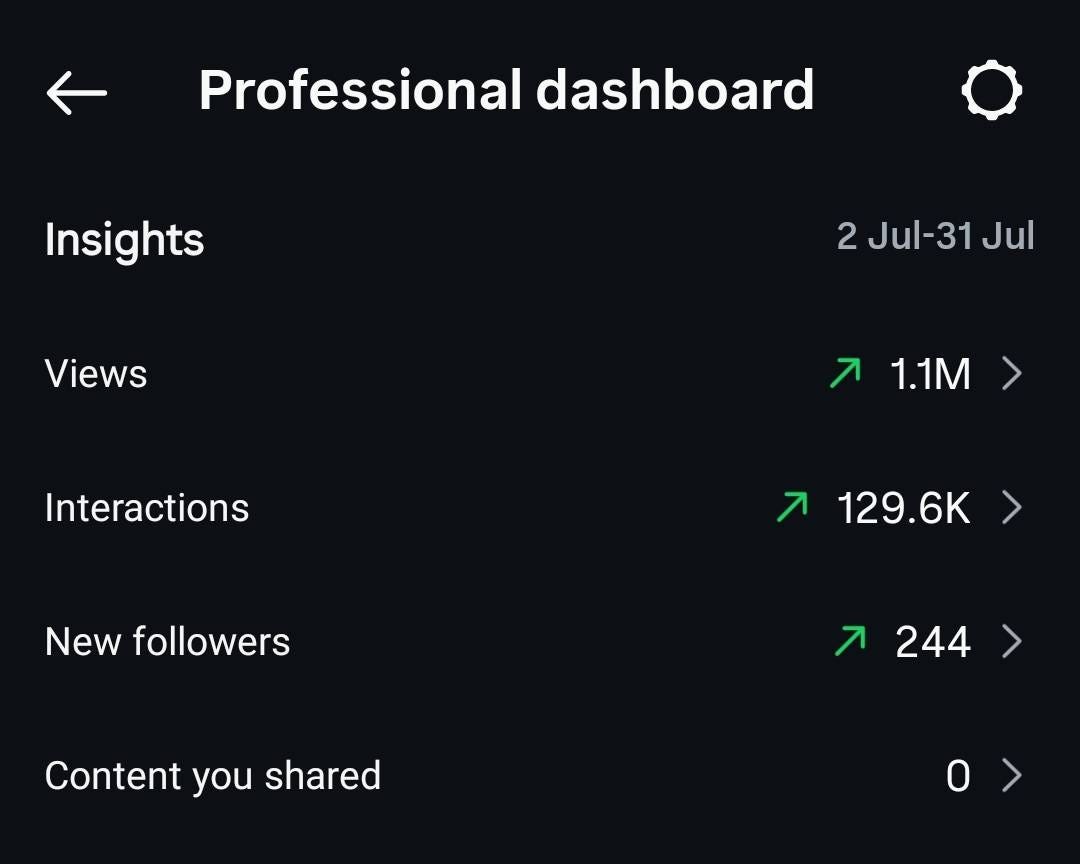
Not the ads dashboard btw. I'm banned from facebook so I can't see that. This is just insta stats. Organic.
When to use: If you're B2C or localized and selling primarily on 'mobile'. Desktop funnels are a bit more complicated.
Ease of use: 3
It's very easy to get started on Meta, since the 2023 update to their advertising dashboard. As long as you follow the best practices of paid ads (i.e., define your audience sharply and target each 'meaningful sector' with a separate creative), the campaign creation process is a breeze and you won't accidentally shoot yourself in the foot.
The tricky part is the ad approval process on facebook. It takes a while and if your creative is flagged, then it's a pain in the ass to get it through. I know, because I tried to use Elon Musk in an ad creative and got flagged for it … and then had to make a new account to escape the review hell.
Budget friendliness: 5
One of the cheapest places to run ads. Of course the CPCs vary based on demographics but it's still going to be cheaper than most other places.
Targeting ability: 2.5
Meta's targeting can be surprisingly precise … on the dashboard. What happens behind the algorithm is not so clean.
Let's consider an example:
Say you want to target "Marketers". The campaign creation will allow you to do so. But then ask yourself: How does the algorithm know whether someone's a marketer or not? Do people put that in their bios on facebook or insta?
Of course not. So the algorithm likely 'infers' that based on user interactions. So even if the dashboard allows you to target specific demographics, what's happening behind the scenes might trip you up if you find it out.
If your targeting is geography or 'interests' based, you're in good hands. Everything else is a little doubtful.
Overall return on investment: 2.5
It can vary business to business but if you're in tech (which you likely are if you're reading this), I would put Meta as a 'brand awareness' play. It's good for getting word out there about you but if you're expecting conversions .. not really.
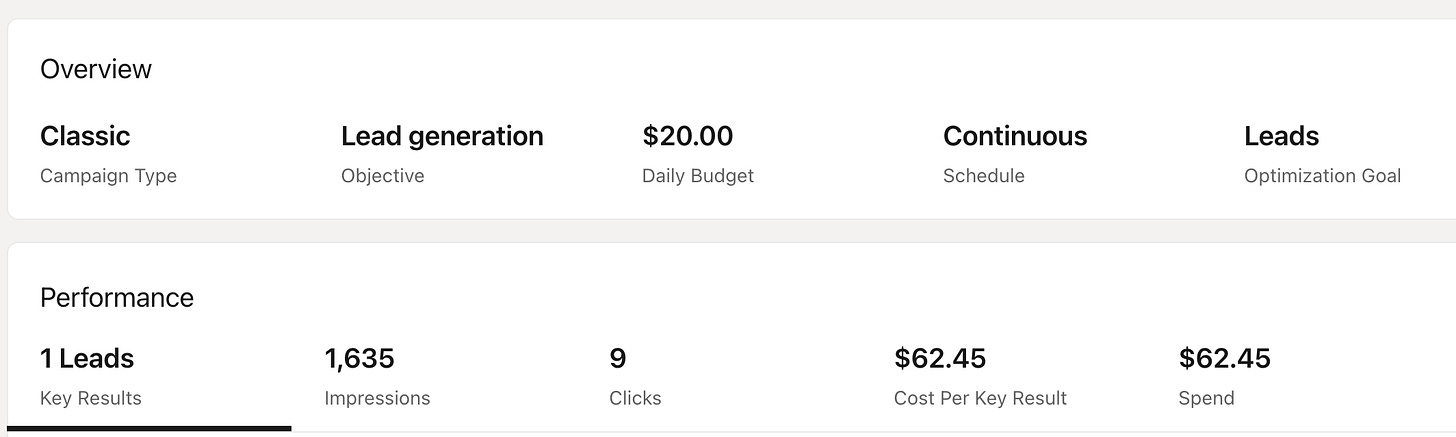
Shit's expensive.
When to use: B2B. Hands down.
Ease of use: 1
Trickiest dashboard to deal with, the one with the most 'gotchas'. It's hard to understand why a campaign objective must be set at the Campaign Group level but then also you can launch different types of campaigns inside Campaigns .. like what.
For what it's worth, Linkedin does offer one free month of ad consultation from their own experts. I highly recommend availing it to learn all about how campaigns work on Linkedin and what type you should be launching.
Budget friendliness: 1
The most expensive of the bunch. Period. Expect to be spending $100/day at the very minimum.
Targeting ability: 5
This is where Linkedin shines. Now, it does come with a bit of gotchas, for example, there can be an overlap in "Software, Computer Programs" and "Information Technology" (the industry categories on Linkedin are extremely outdated).
Luckily, Kirill Vdov has some handy tips to share on nearly every aspect of Linkedin ads. Highly recommend following him.
Overall return on investment: 3
It may seem a bit obtuse at the start but once you understand what different ad formats are for and how to orchestrate a successful campaign, Linkedin can be surprisingly lucrative.
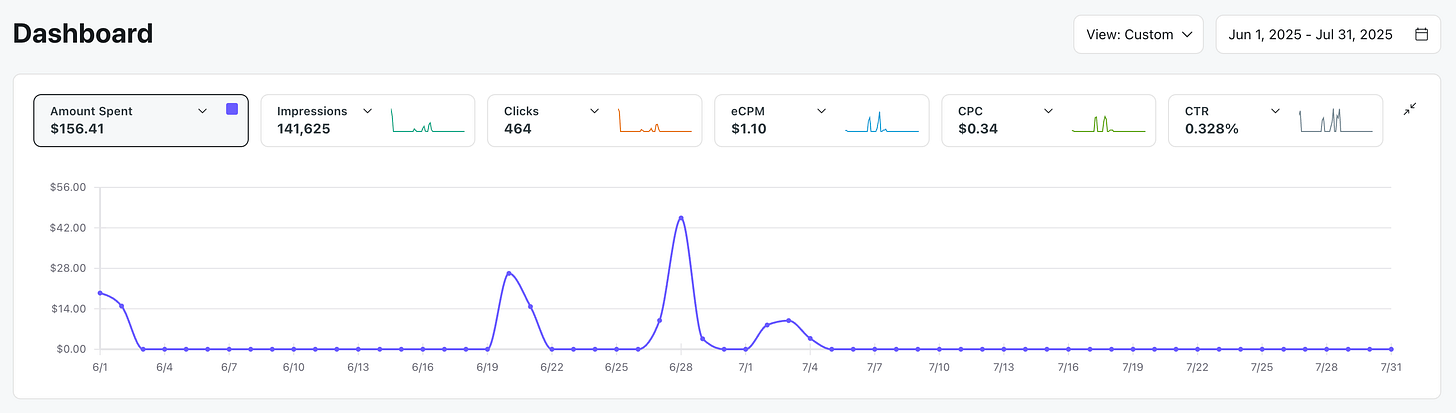
When to use: Nearly every kind of business, except perhaps physical. But something for them too.
Ease of use: 5
It's literally common sense. Not sure if I need to say anything else. Just watch out for the dashboard dates in case you aren't seeing any data show up.
Budget friendliness: 5
It's one of the cheapest ad platforms, you can start with as little as $10 per day and still see results (as long as the ad creative is good — I highly recommend using testimonials or loom videos) and reach CPCs below $0.40 for simple website visits.
Targeting ability: 2.5
Reddit targeting goes far, very far, but for B2B use-cases, not far enough. If I'm targeting r/marketing, for example, my ad will be seen by CMOs, Marketing Managers, and even Interns and students. I have no control over who sees my ad beyond selecting the community or the interests.
But for nearly every single use-case, there is a way to leverage community-based targeting to attract exactly the ICP you want. On Reddit, the ad creative reigns supreme.
Overall return on investment: 4
Arguably, the best place to get started if you are bootstrapped or even at later stages.
X/Twitter
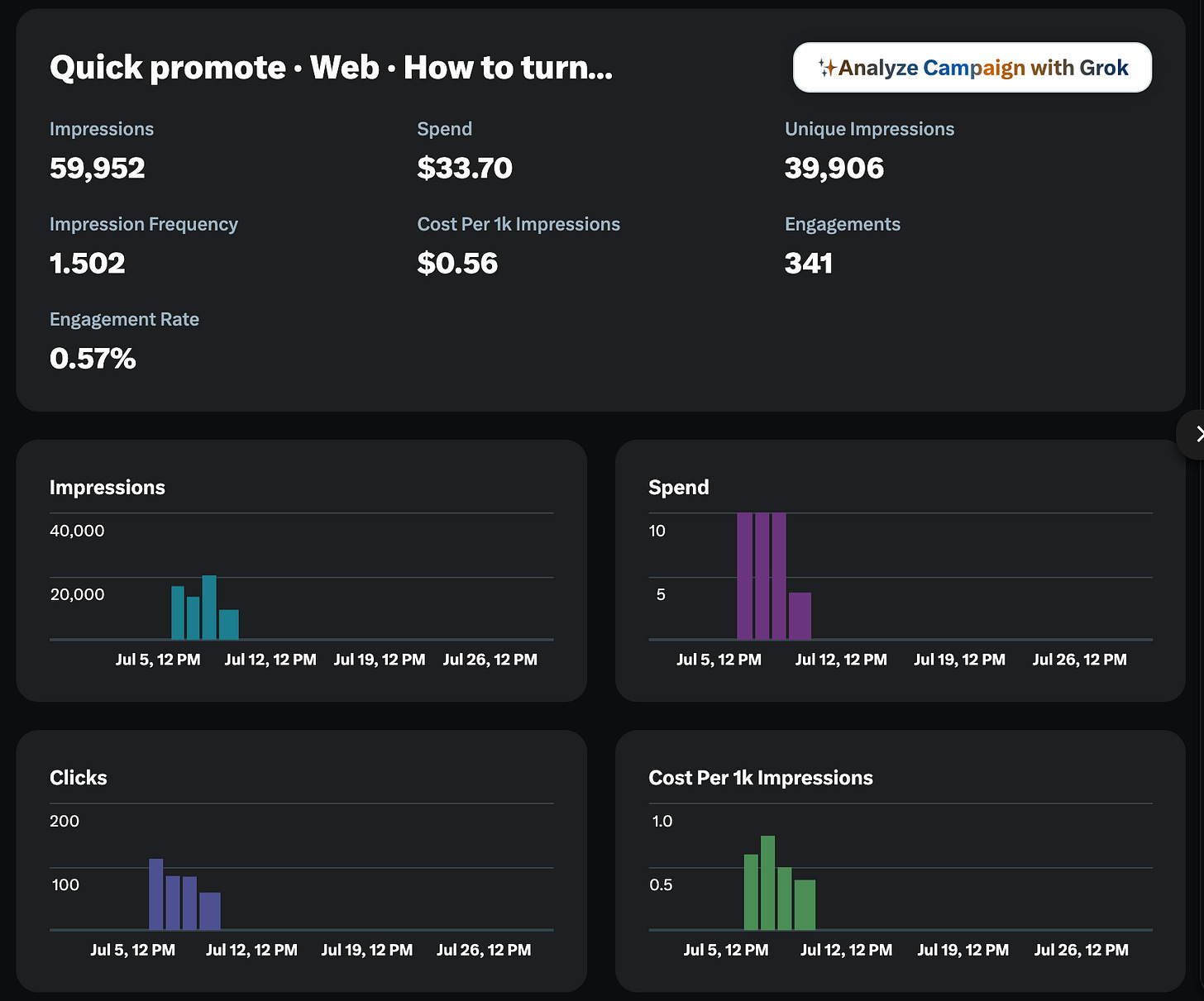
When to use: Same as Reddit.
Ease of use: 3
Some might find it debatable since promoting any tweet is a matter of 4 clicks from the feed itself. But the problem is: you can't pick your target audience from there. It will just randomly show your tweet to an age-based demographic.
It tripped me up the first time until I found out that you can fix the targeting in the dedicated ad dashboard. Which wasn't terribly helpful either, at least when compared to Reddit. Nor did it offer the precision of Linkedin. It's just okay. Not great, not terrible.
Budget friendliness: 3
It would be a 5 given the CPCs I've seen (actually lower than Reddit) but when you actually dig into the 'clicks' you get … most of them are bots.
It's still cheaper overall.
Targeting ability: 3
I'd place it somewhere between Reddit and Linkedin. You have a little more control due to 'interests' and communities, but you're not even close to targeting exactly the demographic that you want to reach.
Overall return on investment: 2
Not recommended. If somebody wants to prove me wrong, be my guest.
Now, what about funnels
With all these channels except for Linkedin, you usually don't have to think beyond just having a landing page or a lead magnet to route people to.
Some best practices for ad creatives:
- Testimonials win. Get a testimonial, written or video, and use that as your creative.
- Choose the ad copy, very very carefully. It can make or break the ad at this scale. Remember, you have limited budget. Use damaging admission, say only what you can say etc. This Alex Hormozi video will help.
- Start with just the ad and link to your landing page and spend about $50 to monitor performance. If the ad creative is getting clicks, now is the time to make a dedicated landing page with an email-capture lead magnet. This way you can retarget (you can also use pixels but that's a more advanced strategy) via email.
I will write more about the different funnels that are easy and free to implement in a future insight. Until then, I hope this helps you choose the right channel and how to get started too.
Get after it.
Not sure which channel fits your stage and ICP? We help founders plan and run early paid tests. Let's talk.
Originally published on Substack. Here.